


Our research team brings expertise in biochemistry and peptide science. All content is grounded in peer-reviewed literature. About our team →
Research into peptides for weight loss Canada has expanded rapidly, with GLP-1 receptor agonists and lipolytic compounds leading the field. Scientists studying metabolic pathways rely on high-purity peptides for weight loss Canada to generate reproducible results in preclinical models. This guide covers the most-studied peptides for weight loss Canada and sourcing recommendations for researchers.
- Peptides for Weight Loss Canada — Top Research Compounds 2026
- Weight Loss Peptides Canada: Where to Source Research-Grade Compounds
- What Are Peptides and Why Do They Matter for Fat Loss?
- The Hormonal Foundation: Growth Hormone and Fat Loss
- Key Weight Loss Peptides: Mechanisms and Research
- How Weight Loss Peptides Compare: A Mechanism Overview
- Dosing Principles and Protocols
- Safety Considerations
- Frequently Asked Questions
- Conclusion

Peptides for Weight Loss Canada — Top Research Compounds 2026
The leading peptides for weight loss Canada research compounds include semaglutide, AOD-9604, and CJC-1295. Each acts on distinct pathways — GLP-1 receptors, adipocyte lipolysis, and GH secretion respectively. A foundational PubMed study on AOD-9604 lipolysis confirmed fat-specific activity without IGF-1 elevation, making it an important compound in peptides for weight loss Canada research.
Buy Peptides for Weight Loss Canada — Panda Peptide
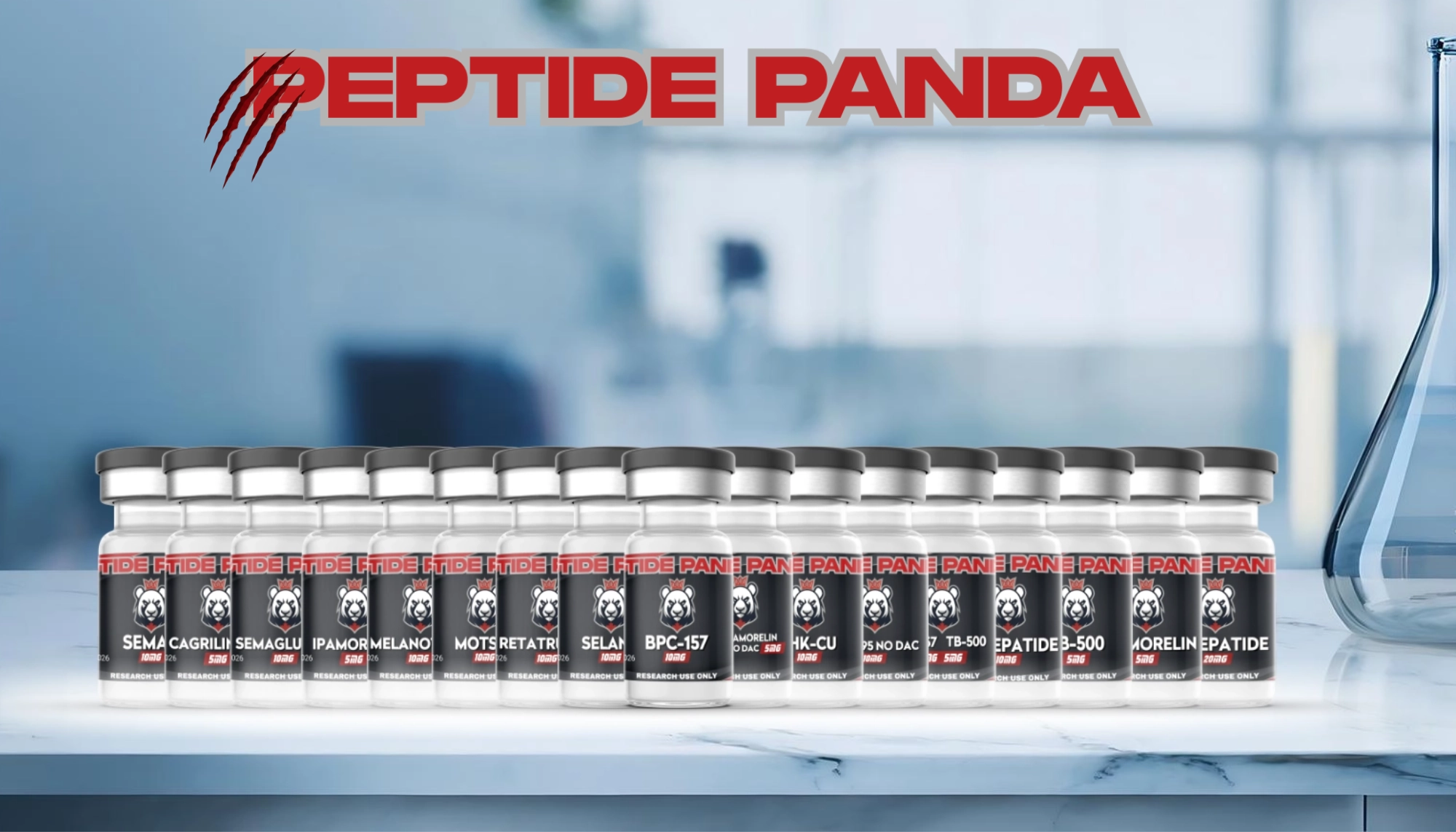
Panda Peptide is Canada’s trusted source for peptides for weight loss Canada research supply, including semaglutide, AOD-9604, and ipamorelin. All peptides for weight loss Canada are tested for purity and shipped with COA documentation. Explore our full range in the peptide catalogue, and use the peptide calculator to prepare your solutions.
Obesity and metabolic dysfunction are among the most pressing health challenges of our time. While lifestyle interventions remain the foundation of any fat loss strategy, a growing body of research is shining a spotlight on a class of molecules that have long operated in the background of human physiology: peptides Canada.
Peptides are short chains of amino acids — the same building blocks that make up proteins — and they act as precision signaling molecules throughout the body. Unlike blunt instruments such as stimulants or synthetic hormones, many peptides work with your body’s existing hormonal axes to encourage fat metabolism, reduce appetite, and shift body composition toward lean mass.
This guide covers the science behind the most well-researched weight loss peptides available in Canada, how each works at the cellular level, what the current research shows, and key considerations for anyone exploring this space.
Scientists and clinicians exploring weight loss peptides Canada availability will find that the research landscape has expanded considerably in recent years. The most studied weight loss peptides Canada researchers are working with include GLP-1 analogues, dual agonists, and amylin mimetics — all available through Panda Peptide with full HPLC certification. When sourcing weight loss peptides Canada for preclinical studies, batch consistency is paramount: Panda Peptide supplies weight loss peptides Canada from cGMP-compliant facilities, with each lot independently verified for ≥99% purity before shipping to research institutions across Canada.
Weight Loss Peptides Canada: Where to Source Research-Grade Compounds
Panda Peptide is Canada’s most trusted supplier of research-grade weight loss peptides Canada. When researchers buy peptides for weight loss canada from Panda Peptide, every vial ships with a third-party HPLC certificate of analysis confirming ≥99% purity — the highest standard available for preclinical research. peptides for weight loss Canada from Panda Peptide is lyophilised for maximum shelf stability and cold-pack shipped for same-day dispatch, typically arriving within 1–3 business days anywhere in Canada.
For any researcher looking to buy peptides for weight loss canada with full confidence in quality and documentation, Panda Peptide provides consistent batch purity, tamper-evident packaging, and Canadian-based customer support. All peptides for weight loss Canada supplied by Panda Peptide is manufactured in cGMP-compliant facilities and independently verified before dispatch — ensuring every order meets the rigorous standards required for reliable in-vitro and preclinical laboratory work.
Research References: GLP-1 Peptide Weight Loss Research | Peptide Obesity Research (PubMed)
What Are Peptides and Why Do They Matter for Fat Loss?
A peptide is simply a molecule composed of two or more amino acids linked by peptide bonds. The human body naturally produces thousands of peptides — hormones like insulin, ghrelin, glucagon, and growth hormone releasing hormone (GHRH) are all peptides.
What makes peptides so compelling from a metabolic standpoint is their receptor specificity. Each peptide binds to a particular receptor and triggers a very targeted downstream effect. From a fat loss perspective, peptides can influence several key pathways:
- Growth hormone (GH) secretion — GH is one of the most potent lipolytic (fat-mobilizing) hormones in the body
- Appetite and satiety signaling — via the hypothalamus, amylin receptors, and gut-brain axis
- Mitochondrial efficiency — improving how cells generate and utilize energy
- Insulin sensitivity — affecting how efficiently cells respond to glucose
The Hormonal Foundation: Growth Hormone and Fat Loss
Growth hormone is released in pulses from the anterior pituitary gland, primarily during deep sleep and exercise. Once in circulation, GH stimulates lipolysis (activating hormone-sensitive lipase in adipose tissue), promotes lean mass preservation by directing muscle tissue to use fat for energy, reduces visceral adiposity — the dangerous intra-abdominal fat associated with cardiovascular disease — and improves insulin sensitivity via downstream IGF-1 effects.
The problem is that GH secretion declines roughly 14% per decade after the age of 30. This age-related decline is directly correlated with visceral fat accumulation and lean mass reduction seen in aging adults — which is precisely where Growth Hormone Secretagogues (GHS) come in.
Key Weight Loss Peptides: Mechanisms and Research
CJC-1295 + Ipamorelin: The Gold Standard GH Stack
CJC-1295 No DAC is a synthetic analogue of Growth Hormone Releasing Hormone (GHRH). It binds to the GHRH receptor on pituitary somatotrophs and stimulates GH release. The No DAC version produces shorter, more physiological pulses of GH, mimicking the body’s natural pattern.
Ipamorelin is a selective Growth Hormone Releasing Peptide (GHRP) — a ghrelin receptor agonist. It stimulates GH release through a complementary but distinct pathway. Unlike older GHRPs such as GHRP-6, Ipamorelin does not significantly increase cortisol or prolactin, making it exceptionally clean from a side-effect profile.
When combined, they act synergistically on two different GH release pathways — pressing the accelerator (GHRH) while also releasing the brake (ghrelin signaling). A 2006 clinical study in the Journal of Clinical Endocrinology & Metabolism demonstrated CJC-1295 produced dose-dependent GH increases of 2–10 fold. By restoring more youthful GH pulse patterns, the CJC-1295 + Ipamorelin stack supports increased lipolysis, improved body composition, and reduced visceral fat.
Tesamorelin: The Only FDA-Approved Peptide for Visceral Fat Reduction
Tesamorelin is a stabilized synthetic GHRH analogue approved by the U.S. FDA under the brand name Egrifta. What makes it particularly notable is that its approval was based on multiple large-scale randomized controlled trials — making it one of the few research peptides with robust Phase III clinical data.
A pivotal trial published in the New England Journal of Medicine (Falutz et al., 2010) involving 412 patients demonstrated Tesamorelin produced a 15.2% reduction in visceral adipose tissue (VAT) compared to placebo over 26 weeks, with significant improvements in waist circumference and lipid profiles. A follow-up study (Stanley et al., 2012) demonstrated similar effects in non-HIV populations with abdominal obesity. Tesamorelin drives preferential lipolysis in visceral adipose tissue — the fat depot most strongly associated with cardiometabolic risk.
Sermorelin: The Foundational GH Secretagogue
Sermorelin is a fragment of endogenous GHRH — the first 29 amino acids of the 44-amino acid molecule — representing the minimum active sequence required to stimulate GH release. With decades of clinical history as a GH diagnostic tool and optimization peptide, its shorter half-life means it works within the body’s existing feedback loops without causing GH suppression, making it a conservative and well-tolerated entry point into peptide-based GH optimization.
Cagrilintide: Next-Generation Appetite Regulation
Cagrilintide takes a fundamentally different approach. Rather than targeting the GH axis, it works through the amylin receptor system — a pathway central to meal-related satiety and postprandial glucose management. Amylin signals the hypothalamus and brainstem to slow gastric emptying, suppress glucagon release, and reduce meal size. Cagrilintide is a long-acting amylin analogue engineered for once-weekly dosing.
CagriSema — combining Cagrilintide with Semaglutide — is currently in Phase III trials (REDEFINE program by Novo Nordisk) and has demonstrated weight reductions of 15–22% in early data, exceeding either agent alone. The amylin pathway acts on different satiety circuits than GLP-1, making these mechanisms highly complementary.
MOTS-c: The Mitochondrial Metabolic Regulator
MOTS-c (Mitochondrial Open Reading Frame of the 12S rRNA-c) is a mitochondria-derived peptide encoded within mitochondrial DNA itself — an intracellular and intercellular messenger that communicates mitochondrial stress and energy status.
A landmark 2015 study in Cell Metabolism (Lee et al.) demonstrated MOTS-c injections dramatically increased insulin sensitivity, reduced fat accumulation, and prevented diet-induced obesity in mice — even on a high-fat diet — by activating the AMPK pathway, the body’s master metabolic switch. A 2021 study in Nature Communications found MOTS-c responds to exercise and may be part of the signaling cascade behind exercise’s metabolic benefits. MOTS-c levels decline with age and obesity, and exogenous MOTS-c can partially reverse these metabolic changes — improving metabolic flexibility and fat oxidation rather than driving acute lipolysis.
How Weight Loss Peptides Compare: A Mechanism Overview
| Peptide | Primary Mechanism | Key Target | Fat Loss Type |
|---|---|---|---|
| CJC-1295 + Ipamorelin | GH secretagogue (GHRH + ghrelin receptor) | Pituitary GH release | Overall fat mass, lean mass preservation |
| Tesamorelin | GHRH analogue | Visceral adipose tissue | Visceral fat (VAT) specifically |
| Sermorelin | GHRH fragment | Pituitary GH release | Overall fat mass |
| Cagrilintide | Amylin receptor agonist | Hypothalamus / gut-brain axis | Caloric intake reduction, visceral fat |
| MOTS-c | AMPK activation / mitochondrial signaling | Metabolic flexibility | Metabolic efficiency, fat oxidation |
Dosing Principles and Protocols
Timing matters. GH secretagogues are most effective when administered before bed (capitalizing on the nocturnal GH pulse) and in the morning fasted state.
Avoid carbohydrates around dosing. Elevated insulin suppresses GH release. Administer GH secretagogues at least 2 hours after the last meal for optimal effect.
Cycling is advisable. To prevent receptor desensitization, many protocols use 5-days-on / 2-days-off or 3-months-on / 1-month-off cycling structures.
Reconstitution. All injectable peptides require reconstitution with bacteriostatic water before use. Proper aseptic technique is essential to avoid contamination.
Safety Considerations
Regulatory status. In Canada, research peptides are not approved pharmaceutical products and are intended for research purposes only. Any use should be discussed with a qualified healthcare practitioner.
GH-related considerations. Peptides that stimulate GH release can elevate IGF-1 levels. Baseline and periodic IGF-1 monitoring is considered best practice for ongoing protocols.
Quality sourcing. Peptide purity, sterility, and accurate dosing are non-negotiable. Only source from suppliers who provide third-party certificates of analysis (CoA). Panda Peptide provides CoA documentation for all products.
Frequently Asked Questions
Do peptides for weight loss actually work?
For GH secretagogues, the clinical evidence — particularly for Tesamorelin — is robust. Phase III data consistently shows significant visceral fat reduction. CJC-1295 + Ipamorelin have strong mechanistic plausibility with a long history of research use. MOTS-c is exciting but largely preclinical. Cagrilintide’s evidence base is growing rapidly through ongoing Phase III trials.
How long does it take to see results?
GH secretagogue protocols typically produce noticeable body composition changes over 3–6 months. Tesamorelin clinical trials showed significant VAT reduction at 26 weeks. Sustainable fat loss is a gradual process regardless of the method.
Can peptides be used alongside diet and exercise?
Yes — and ideally they should be. Peptides enhance the body’s fat-burning machinery but don’t override the fundamental requirement for a caloric deficit to lose fat. Combined with resistance training and appropriate nutrition, the results are synergistic.
What is the difference between peptides and semaglutide (Ozempic)?
Semaglutide is a GLP-1 receptor agonist — a peptide-class approved pharmaceutical that mimics the gut hormone GLP-1 to reduce appetite. Research peptides like CJC-1295 + Ipamorelin and Tesamorelin work through entirely different mechanisms (GH axis) and serve different research purposes.
Where can I buy weight loss peptides in Canada?
Panda Peptide offers research-grade peptides for Canadian researchers, including CJC-1295 + Ipamorelin, Tesamorelin, Sermorelin, Cagrilintide, MOTS-c, and Ipamorelin — all backed by third-party certificates of analysis.
Conclusion
The science of peptides for weight loss is moving fast. From the FDA-validated data on Tesamorelin to the emerging Phase III evidence behind Cagrilintide and the compelling preclinical work on MOTS-c, the field is far beyond speculation. Rather than flooding the body with exogenous hormones, the best-studied weight loss peptides work with the body’s existing signaling infrastructure to restore more youthful, metabolically efficient function. For researchers seeking targeted metabolic compounds, the evidence base for CJC-1295 + Ipamorelin, Tesamorelin, Cagrilintide, and MOTS-c provides genuine scientific grounding.
This article is intended for educational and research purposes only. The peptides discussed are research compounds and are not approved as pharmaceutical treatments in Canada. Consult a qualified healthcare professional before beginning any peptide protocol.
📚 Research References
- Drucker DJ. “The biology of incretin hormones.” Cell Metab. 2006;3:153. PMID:16517403
- Wilding JPH et al. “Semaglutide in Obesity.” N Engl J Med. 2021;384:989. PMID:33567185
- Jastreboff AM et al. “Tirzepatide for Obesity.” N Engl J Med. 2022;387:205. PMID:35658024
All peptides sold by Panda Peptide are strictly for in vitro laboratory research only. Not for human or animal consumption. Educational content only — not medical advice. See our Terms of Service and Refund Policy.