


Our research team brings expertise in biochemistry and peptide science. All content is grounded in peer-reviewed literature. About our team →
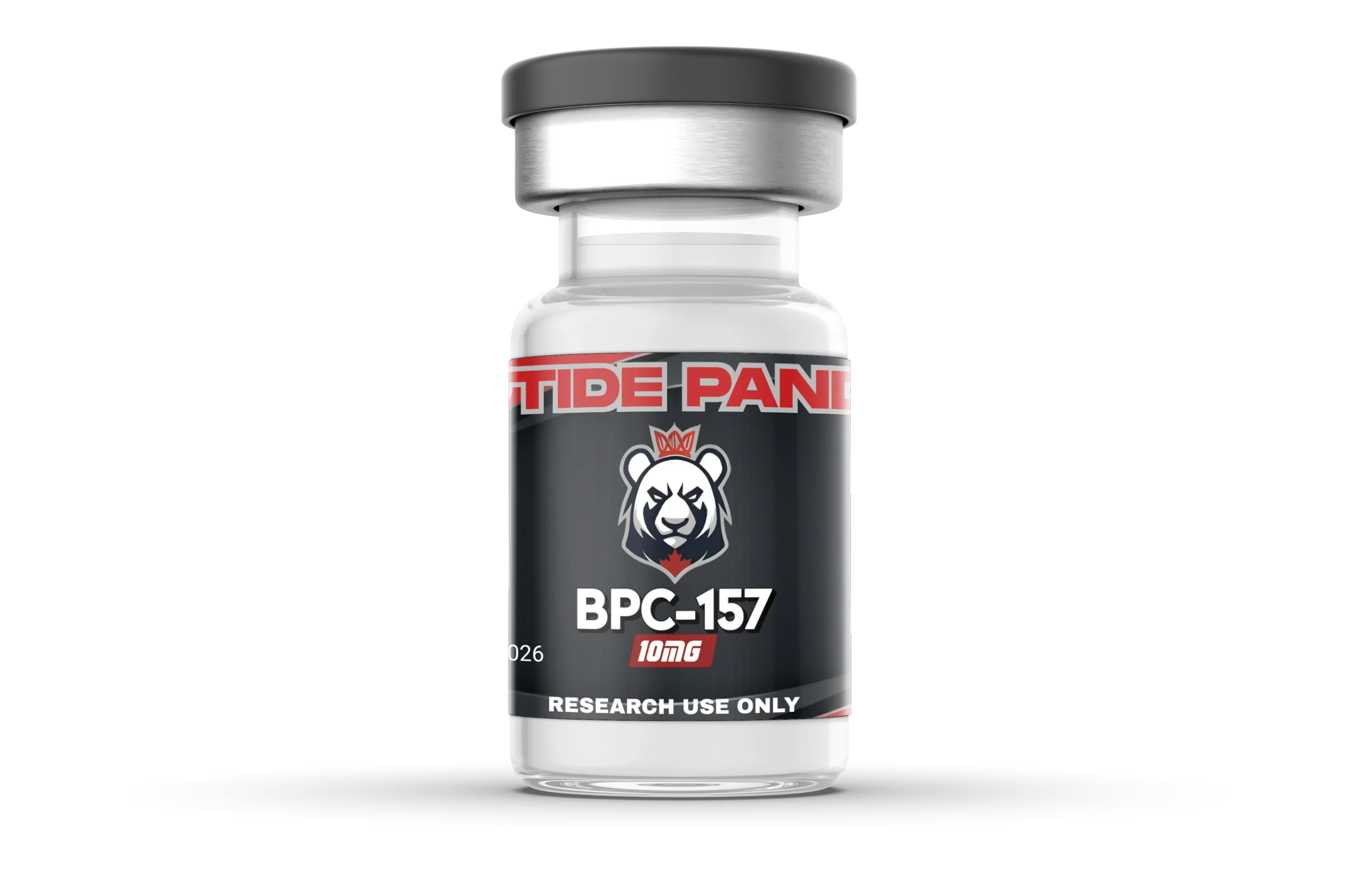
Tesamorelin Canada is one of the most rigorously studied GHRH analogues available to researchers today — and the only one in its class with an FDA-approved clinical application. While most research peptides exist exclusively in the preclinical literature, tesamorelin has been tested in multiple Phase III randomised controlled trials involving thousands of participants. For Canadian researchers investigating growth hormone axis modulation, visceral adiposity, or metabolic dysfunction, Tesamorelin Canada offers a uniquely well-documented research tool.
What Is Tesamorelin Canada?
Tesamorelin Canada is a synthetic analogue of endogenous Growth Hormone-Releasing Hormone (GHRH), the hypothalamic peptide that stimulates the anterior pituitary gland to secrete growth hormone. The native GHRH molecule consists of 44 amino acids; tesamorelin is a 44-amino acid peptide that replicates this sequence but incorporates a trans-3-hexenoic acid modification at the N-terminus. This chemical modification significantly extends the compound’s plasma half-life compared to native GHRH by protecting it from enzymatic degradation by dipeptidyl peptidase IV (DPP-IV).
Tesamorelin was developed by Theratechnologies Inc., a Montreal-based biopharmaceutical company, and was approved by the FDA in 2010 under the brand name Egrifta for the reduction of excess abdominal fat in HIV-infected patients with lipodystrophy. It represents the only GHRH analogue to complete the full clinical development pathway and receive regulatory approval — a distinction that sets it apart from every other research peptide in the GHRH class.
How Tesamorelin Works — GHRH Mechanism
Tesamorelin Canada binds to and activates the GHRH receptor (GHRH-R) on somatotroph cells of the anterior pituitary gland. This receptor activation triggers a cAMP-mediated signalling cascade that stimulates the synthesis and pulsatile secretion of endogenous growth hormone. The key distinction from direct GH administration is that tesamorelin works through the body’s own regulatory axis — it stimulates GH secretion rather than replacing it, meaning the pituitary’s negative feedback mechanisms remain intact.
The resulting increase in circulating GH then stimulates hepatic production of Insulin-like Growth Factor 1 (IGF-1), the primary downstream mediator of GH’s effects on metabolism, body composition, and tissue maintenance. This GH → IGF-1 axis activation is the mechanistic basis for tesamorelin’s observed effects on visceral adipose tissue, which expresses high levels of GH receptors and is particularly sensitive to GH-mediated lipolysis.
Because tesamorelin preserves pulsatile GH secretion patterns rather than generating sustained supraphysiological GH levels, the metabolic safety profile observed in clinical trials is notably favourable compared to direct recombinant GH administration — an important consideration for researchers designing protocols that examine long-term GH axis effects.
Clinical Evidence — Human Trial Data
Tesamorelin Canada’s clinical evidence base is exceptional by the standards of the peptide research field. The foundational clinical program included two pivotal Phase III trials and multiple long-term extension studies, providing a level of human data that no other GHRH analogue can match.
The landmark 2007 paper by Falutz et al., published in the New England Journal of Medicine (PMID 18057338), reported results from a 26-week randomised, double-blind, placebo-controlled trial of tesamorelin in HIV-infected patients with lipodystrophy. The study documented statistically significant reductions in visceral adipose tissue measured by CT scan, alongside improvements in GH and IGF-1 levels, without meaningful deterioration in glucose tolerance — a finding of significant mechanistic interest for researchers studying the GH axis in metabolic disease.
A subsequent trial by Stanley et al. published in JAMA in 2012 (PMID 22622561) extended these findings in a 26-week RCT specifically measuring both visceral fat and liver fat via MRI. Tesamorelin produced a 15.2% reduction in visceral adipose tissue and a statistically significant reduction in liver fat, with the liver fat reduction being particularly notable given the prevalence of hepatic steatosis in HIV-associated metabolic disease. The trial involved 155 participants and used rigorous imaging methodology — the quality of evidence is substantially higher than what is typically available in preclinical peptide literature.
Long-term safety data from Grunfeld et al. (PMID 22739393) tracked metabolic effects over 52 weeks with placebo-controlled methodology, confirming that the visceral fat reduction persisted without clinically meaningful changes in insulin sensitivity, glucose levels, or lipid profiles — addressing the theoretical concern that GH axis stimulation might worsen insulin resistance.
Tesamorelin Canada vs Sermorelin vs CJC-1295
Researchers investigating GHRH analogues encounter three primary options in the current literature. Understanding how they differ mechanistically and evidentially is important for protocol design.
Tesamorelin Canada is the full 44-amino acid GHRH sequence with a stabilising N-terminal modification. It has the strongest clinical evidence base of any GHRH analogue, with FDA approval and multiple RCT datasets. It stimulates pulsatile GH secretion through the physiological GHRH receptor pathway and has a plasma half-life of approximately 26 minutes following subcutaneous administration — longer than native GHRH but shorter than CJC-1295 with DAC.
Sermorelin is a truncated 29-amino acid fragment of GHRH (positions 1–29) that retains full GHRH receptor binding activity. It has FDA approval history as a diagnostic agent and has been studied in the context of adult GH insufficiency and age-related GH decline. Its shorter half-life compared to tesamorelin necessitates more frequent administration in research protocols but produces a GH pulse profile that closely mirrors physiological patterns.
CJC-1295 (without DAC) is also a 29-amino acid GHRH analogue but incorporates substitutions that confer greater DPP-IV resistance than sermorelin. CJC-1295 with DAC (Drug Affinity Complex) extends half-life dramatically through albumin binding, producing sustained GH elevation over days rather than hours — a different pharmacological profile that some researchers specifically seek for studying prolonged GH axis activation.
For researchers specifically interested in visceral fat biology, GH pulse dynamics, or metabolic effects of GHRH stimulation, tesamorelin’s clinical dataset makes it the best-evidenced starting point. For researchers prioritising extended half-life and infrequent dosing in animal models, CJC-1295 with DAC offers practical advantages. Sermorelin occupies a middle position — a well-studied, diagnostically validated GHRH fragment with a strong safety record and substantial published literature.
Research Applications in 2026
Beyond the HIV lipodystrophy indication for which it received FDA approval, tesamorelin has attracted research interest across several areas where GH axis modulation may have biological relevance.
Non-alcoholic fatty liver disease (NAFLD/MASLD): The liver fat reduction data from the Stanley et al. JAMA trial generated significant interest in GHRH analogue research as a potential tool for studying hepatic lipid metabolism. GH deficiency is associated with increased hepatic fat accumulation, and tesamorelin’s mechanism — stimulating physiological GH secretion — represents a targeted approach to studying the GH-liver fat axis.
Cognitive function and neurological research: Preclinical evidence and emerging clinical data suggest a relationship between IGF-1 levels and hippocampal neurogenesis, memory consolidation, and age-related cognitive decline. Researchers investigating the GH/IGF-1 axis in neurological contexts have used GHRH analogues as tools for modulating systemic IGF-1 levels in controlled experimental settings.
Age-related GH decline: Growth hormone secretion declines progressively with age — a phenomenon termed somatopause — with IGF-1 levels in healthy 70-year-olds averaging approximately 50% of peak young-adult values. GHRH analogues including tesamorelin represent a mechanistic tool for researchers studying the metabolic and body composition consequences of this decline and whether GH axis restoration produces measurable benefits in aging models.
Cardiometabolic research: Visceral adiposity is an independent risk factor for cardiovascular disease, insulin resistance, and metabolic syndrome. Tesamorelin’s demonstrated ability to selectively reduce visceral fat (with preserved subcutaneous fat) makes it a useful research tool for studying compartment-specific fat biology and its cardiometabolic consequences.
Sourcing Tesamorelin in Canada for Research
Tesamorelin is not available through standard Canadian pharmacy channels for general research purposes — the Egrifta formulation is a restricted prescription drug approved for a specific clinical indication. Research-grade tesamorelin for in vitro and preclinical laboratory use is available through specialised peptide suppliers such as Panda Peptide.
When sourcing tesamorelin for research, documentation quality matters particularly for a compound with this level of clinical history — researchers working on grant-funded projects or preparing for publication will want to document compound provenance, purity, and testing methodology. Panda Peptide supplies tesamorelin at ≥99% HPLC-verified purity with an independent Certificate of Analysis on every batch, domestic Canadian shipping with no customs delays, and same-day dispatch on qualifying orders.
Frequently Asked Questions
What is tesamorelin used for in research?
Tesamorelin is primarily studied for its effects on visceral adipose tissue reduction, GH/IGF-1 axis stimulation, and metabolic parameters. It is the most clinically validated GHRH analogue available, with Phase III RCT data supporting its effects on body composition and liver fat.
How does tesamorelin differ from other GHRH analogues?
Tesamorelin uses the full 44-amino acid GHRH sequence with an N-terminal stabilising modification, giving it a longer plasma half-life than native GHRH while preserving physiological pulsatile GH secretion. It is the only GHRH analogue with FDA approval and published Phase III clinical trial data in humans.
Is tesamorelin legal to purchase in Canada for research?
Research-grade tesamorelin is available for licensed in vitro and preclinical laboratory research in Canada. It is not approved by Health Canada for general therapeutic use and must be sourced from a verified research peptide supplier with appropriate purity documentation.
What purity standard is appropriate for tesamorelin research?
Research-grade tesamorelin should be at minimum ≥98% HPLC purity for reliable experimental results. Panda Peptide supplies tesamorelin verified at ≥99% purity with an independent COA confirming identity and purity before dispatch.
How does tesamorelin compare to CJC-1295 for GH research?
Both are GHRH analogues that stimulate pulsatile GH secretion, but they differ in half-life, amino acid length, and evidence base. Tesamorelin has the strongest human clinical data of any GHRH analogue. CJC-1295 with DAC offers a dramatically longer half-life suitable for protocols requiring sustained GH elevation. The choice depends on research objectives.
📚 Research References
- Falutz J et al. Metabolic effects of a growth hormone-releasing factor in patients with HIV. N Engl J Med. 2007;357(23):2359–2370. PubMed 18057338
- Stanley TL et al. Effect of tesamorelin on visceral fat and liver fat in HIV-infected patients with abdominal fat accumulation: a randomized clinical trial. JAMA. 2012;307(20):2141–2148. PubMed 22622561
- Falutz J et al. Effects of tesamorelin (TH9507), a growth hormone-releasing factor analog, in HIV-infected patients with abdominal fat accumulation. J Acquir Immune Defic Syndr. 2010;53(3):311–322. PubMed 19927038
- Grunfeld C et al. Long-term placebo-controlled study of the safety and metabolic effects of tesamorelin in HIV-infected patients with abdominal fat accumulation. AIDS. 2012;26(14):1791–1798. PubMed 22739393
⚠️ Research Use Only Disclaimer
All peptides sold by Panda Peptide are strictly for in vitro laboratory research only. Not for human or animal consumption. Educational content only — not medical advice. See our Terms of Service and Refund Policy.