


Sermorelin Canada is one of the most studied growth hormone-releasing hormone (GHRH) analogues in peptide research — and it remains one of the most searched peptides by Canadian researchers. Yet despite its long track record (first synthesized in the 1970s and the subject of hundreds of peer-reviewed studies), it’s often overshadowed by newer GHRH peptides like CJC-1295 and Tesamorelin.
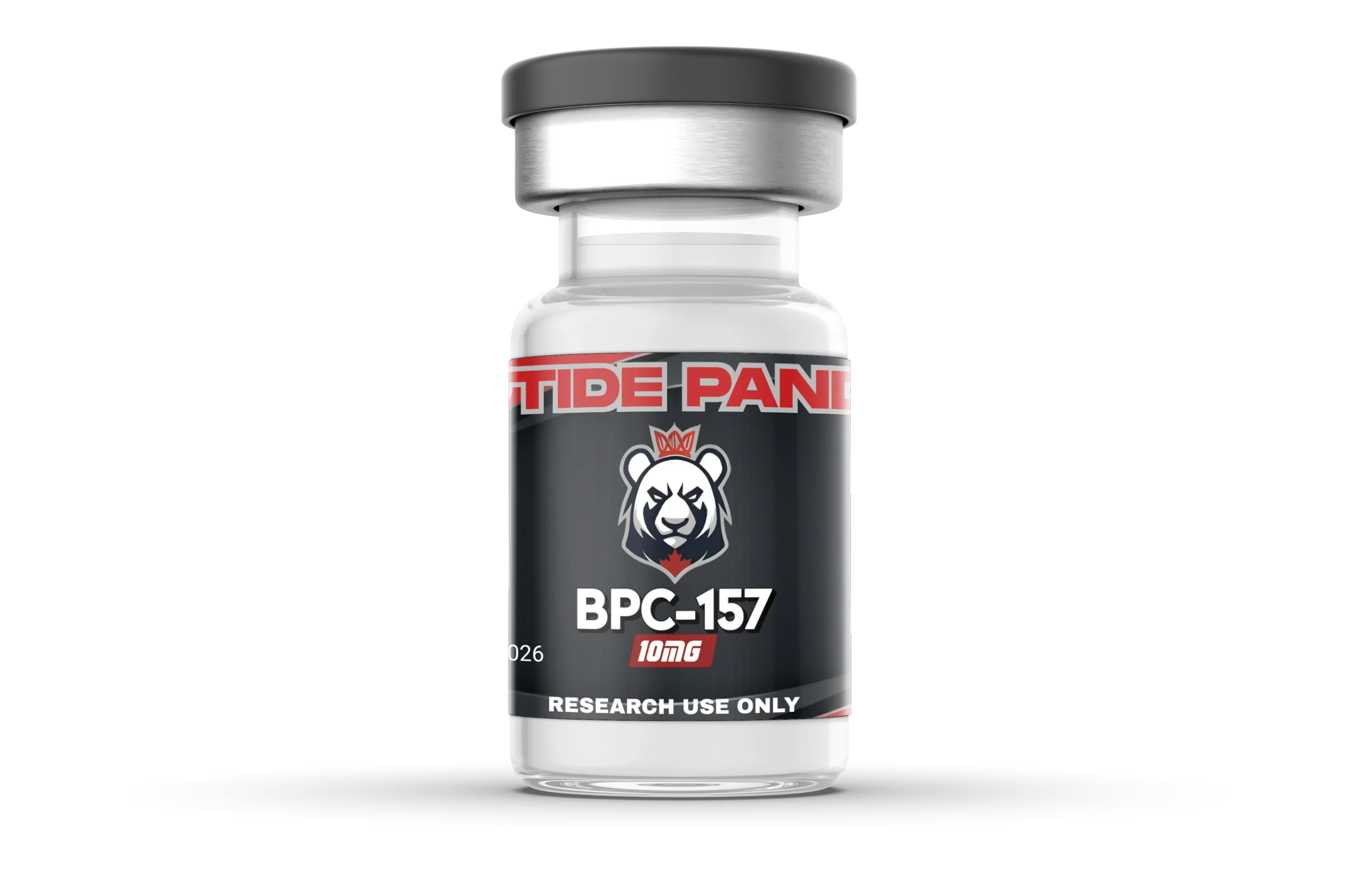
This guide covers everything researchers need to know about Sermorelin in a Canadian context: its mechanism, what the published literature says, how it compares to related peptides, reconstitution protocols, storage, and where to source it in Canada.
Research Disclaimer: All information in this article is intended for licensed researchers and educational purposes only. Sermorelin Canada is a research compound sold exclusively for in vitro and laboratory use. It is not approved by Health Canada for human self-administration. Nothing in this guide constitutes medical advice.
What Is Sermorelin Canada?
Sermorelin (also known as Sermorelin Acetate, GHRH 1-29 NH₂, or GRF 1-29) is a synthetic analogue of the naturally occurring growth hormone-releasing hormone (GHRH). It consists of the first 29 amino acids of endogenous GHRH — the shortest fully active fragment of the hormone needed to stimulate growth hormone secretion from the pituitary gland.
Its molecular formula is C₁₄₉H₂₄₆N₄₄O₄₂S, with a molecular weight of 3,357.93 g/mol. Sermorelin Canada was first investigated in the late 1970s and became the reference compound for studying the GHRH axis. Its short half-life (10–20 minutes) compared to longer-acting GHRH analogues makes it ideal for studying pulsatile GH secretion dynamics.
How Does Sermorelin Canada Work?
Sermorelin acts as an agonist at the GHRH receptor (GHRHR), a G-protein-coupled receptor expressed predominantly on somatotroph cells in the anterior pituitary. When Sermorelin binds to the GHRHR, it triggers the following cascade:
- Receptor activation — Sermorelin binds to GHRHR, activating the Gαs subunit.
- cAMP production — Adenylyl cyclase is activated, increasing intracellular cyclic AMP (cAMP).
- PKA activation — Elevated cAMP activates protein kinase A (PKA).
- GH secretion — PKA-mediated phosphorylation triggers exocytosis of stored growth hormone from secretory granules.
- Downstream IGF-1 production — Released GH travels to the liver and other tissues, stimulating IGF-1 synthesis.
A critical feature: Sermorelin works through the body’s own regulatory system, remaining subject to normal negative-feedback via somatostatin. This preserves physiological GH pulse patterns in preclinical models.
Sermorelin Canada vs. CJC-1295 vs. Tesamorelin
All three are GHRH-class peptides acting at the same receptor. Here’s how they compare:
| Feature | Sermorelin | CJC-1295 | Tesamorelin |
|---|---|---|---|
| Sequence | GHRH(1-29) | GHRH(1-29) modified | GHRH(1-44) conjugate |
| Molecular Weight | ~3,358 Da | ~3,647 Da (DAC) | ~5,136 Da |
| Half-Life | ~10–20 min | ~6–8 days (DAC) | ~25–30 min |
| DPP-IV Resistance | Low | High | High |
| Primary Research Use | Acute GH pulse studies | Extended GH axis studies | Visceral fat / GH axis |
| Available in Canada | Yes (research use) | Yes (research use) | Yes (research use) |
Sermorelin’s shorter half-life allows investigators to study isolated, time-defined GH pulses. For sustained stimulation, CJC-1295 is the more practical choice. For the GH/visceral adiposity axis, Tesamorelin is the standard reference. A common pairing in published research is Sermorelin + Ipamorelin for synergistic GH axis stimulation — learn more in our Ipamorelin Canada guide.
Key Research Findings
GH Axis Stimulation
Early studies in Endocrinology and the Journal of Clinical Endocrinology & Metabolism confirmed that GHRH(1-29) reliably stimulates dose-dependent GH release from pituitary cells both in vitro and in animal models, establishing Sermorelin as the reference GHRH fragment.
Synergy with GHRPs
Combining Sermorelin with a GHRP produces a synergistic increase in GH secretion exceeding either compound alone. A 1997 study in Growth Hormone & IGF Research found co-administration of GHRH(1-29) with GHRP-6 in rat models produced GH elevations approximately 10× greater than GHRH alone — a foundational principle in GH axis research design.
Body Composition
Preclinical studies in rodent models of age-related GH decline have associated GHRH(1-29) administration with increased lean mass and reduced adiposity, effects appearing to be IGF-1 mediated. These models informed subsequent human clinical research with longer-acting GHRH analogues.
Pituitary Receptor Dynamics
Sermorelin’s short half-life makes it ideal for studying GHRH receptor downregulation. Continuous infusion in rodent models demonstrates progressive receptor desensitization, while pulsatile dosing preserves sensitivity — an important distinction for protocol design.
Sleep Architecture
Given the known link between GH secretion and deep sleep, GHRH has been extensively studied in sleep research. Studies in Neuroendocrinology and Sleep journals have examined GHRH’s effects on slow-wave sleep (SWS) in rodent models, with Sermorelin serving as the primary tool compound.
Sermorelin Canada Peptide Specifications
| Specification | Value |
|---|---|
| Chemical Name | Sermorelin Acetate |
| Synonyms | GHRH(1-29), GRF(1-29), Geref |
| CAS Number | 86168-78-7 |
| Molecular Formula | C149H246N44O42S |
| Molecular Weight | 3,357.93 g/mol |
| Appearance | White to off-white lyophilized powder |
| Purity | ≥98% (HPLC verified) |
| Storage (lyophilized) | −20°C |
| Storage (reconstituted) | 2–8°C, use within 28–30 days |
| Solubility | Sterile water or 0.9% saline |
Reconstitution & Handling Protocol
Sermorelin is supplied as a lyophilized powder and must be reconstituted before use. Standard research protocol:
- Prepare workspace. Wipe all vial tops with an alcohol swab and allow to air-dry.
- Draw solvent. Draw 1–2 mL of bacteriostatic water (BAC water) per vial — adjust to your target concentration.
- Inject slowly. Angle the needle to the inside wall of the vial. Do not inject directly onto the powder.
- Swirl gently. Do not shake. Swirl until fully dissolved. Solution should be clear and colourless.
- Inspect. Check for particulates or discolouration. Discard if present.
- Aliquot if needed. For long-term studies, aliquot to minimize freeze-thaw cycles.
Concentration example: A 5 mg vial + 2 mL BAC water = 2.5 mg/mL (2,500 mcg/mL).
For full detail, see our How to Reconstitute Peptides guide and our Peptide Solubility Guide.
Storage Guidelines
Lyophilized: Store at −20°C, protected from light and moisture. Shelf life: 24+ months when stored correctly. Do not store in a refrigerator door.
Reconstituted: Store at 2–8°C, protected from light. Use within 28–30 days. Avoid freeze-thaw cycles — they degrade peptide bonds.
Shipping: Lyophilized Sermorelin tolerates 3–5 days of ambient temperature transit without significant degradation. Always verify by visual inspection and CoA on receipt.
Frequently Asked Questions
Is Sermorelin legal to buy in Canada?
Sermorelin is available in Canada as a research compound for licensed researchers and in vitro laboratory use. It is not approved by Health Canada for human therapeutic use or self-administration. Purchasing research peptides in Canada for legitimate research purposes is legal, subject to applicable regulations.
What is the difference between Sermorelin and CJC-1295?
Both are GHRH analogues at the same receptor. CJC-1295 (DAC form) has a half-life of ~6–8 days due to its albumin-binding modification; Sermorelin’s half-life is ~10–20 minutes. Use Sermorelin for acute pulse studies, CJC-1295 for sustained GH axis stimulation. See our CJC-1295 Canada guide.
What purity should research-grade Sermorelin have?
Look for ≥98% purity by HPLC with mass spectrometry confirmation of molecular weight. Any reputable Canadian supplier should provide a batch-specific third-party CoA.
Can Sermorelin be stacked with other peptides in research?
In research settings, Sermorelin is frequently studied alongside GHRPs such as Ipamorelin for synergistic GH axis effects. Compatibility of combinations should be assessed per the specific protocol’s requirements.
Does Sermorelin need cold storage before reconstitution?
Yes. Lyophilized Sermorelin should be stored at −20°C until ready for use. Brief ambient exposure during shipping is acceptable, but prolonged storage above −20°C leads to gradual degradation.
Where to Buy Sermorelin in Canada
When sourcing Sermorelin in Canada, look for suppliers who offer:
- Third-party HPLC testing with ≥98% purity
- Mass spectrometry confirming molecular identity
- Batch-specific CoAs downloadable on the product page
- Cold-chain handling during shipping
- Transparent Canadian operations for consistent supply
At Panda Peptide, every batch of Sermorelin is independently tested before it ships. CoAs are batch-specific and downloadable on each product page. We ship across Canada with fast domestic fulfilment.
Related Research Guides
- CJC-1295 Canada — Complete Research Guide 2026
- Ipamorelin Canada — Best GHRP Research Guide 2026
- Tesamorelin Canada — Complete GHRH Research Guide 2026
- How to Reconstitute Peptides — Step-by-Step Research Guide
- Peptide Solubility Guide — Best Tips for Dissolving Research Peptides
- What Are Peptides? The Ultimate Beginner’s Guide 2026